

Published
IAC 2024
Advancing Experimental Rocketry: FDM-Enabled Ceramic Nozzles for Low-Budget Experimental Propellants
Development and additive manufacturing of low-cost ceramic nozzles for experimental rocketry.
Mexico City at night, from low Earth orbit. · NASA · ISS Expedition 70
Company
MixQuac is an engineering company in Ciudad de México. We build satellite infrastructure where security, bandwidth, compute and interpretation are designed as one system.
The atmosphere seen edge-on: the layer this infrastructure has to cross. · NASA · ISS Expedition 60
Mission
The satellites being specified today will carry government, energy, agricultural and financial data for decades. We think security should be built into that architecture from the start, and the same system should interpret captures on board before sending the result to the ground.
The Milky Way, the band Mesoamerican sources read as Mixcóatl, the cloud serpent. · ESO · S. Brunier
The name
MIX + QUA + C stands for Mixed Quantum Communications: the company's technical principle is hybrid, assigning each part of a problem to the paradigm that solves it best, classical computing, AI, or quantum methods. The root is Mixcoac, from the Nahuatl mixtli (cloud) and cóatl (serpent): the place where the cloud serpent is venerated. Mesoamerican sources associate Mixcóatl with the Milky Way, a luminous band across the night used as a path, a signal and a way to orient. The serpent becomes a trajectory. The cloud becomes information. We chose the name to recover an old image of the future: look at the sky to know how to move forward.
Progress
A chronological record of the work behind MixQuac, followed by the two products now in development.
IAC 2024
Development and additive manufacturing of low-cost ceramic nozzles for experimental rocketry.
GLEX 2025
A sustainable CubeSat structure built from wood, with novel joining mechanisms, to cut cost and orbital debris.
GLEX 2025
Liquid neural networks that estimate and correct a satellite's state and orbital trajectory dynamically, under perturbations and manoeuvres.
GLEX 2025
LuzIA, an AI-based assistant designed to support crew communication, productivity and operations on long-duration space missions.
GLEX 2025
Restorative-justice and conflict-resolution models applied to coordinating governments, companies and other actors peacefully in space exploration.
Milestone
Reached the final on the QCi track with XiuhQ v1.0.0, our quantum-classical optimization system, released publicly with the submission.
IAC 2026
A hybrid quantum-classical system combining dimensionality reduction, variational quantum circuits and classical classification to analyse hyperspectral satellite imagery with limited computational resources.
IAC 2026
The economic, organizational and resilience risks that appear when artificial intelligence and decision-making in space programmes concentrate in a few systems or actors.
QCRNG
Quantum Cryptographic Random Number Generator
Every key your infrastructure depends on is drawn from a source of randomness. QCRNG is a hardware entropy source whose unpredictability comes directly from a quantum process.
GeoAI
Geospatial intelligence platform
MixQuac GeoAI transforms Earth-observation data into decision-ready geospatial intelligence using AI and edge-processing workflows, built so the analysis runs the same way whether it executes on the ground today or on board later.
Team
Everyone here is a co-author of the company's public technical work.
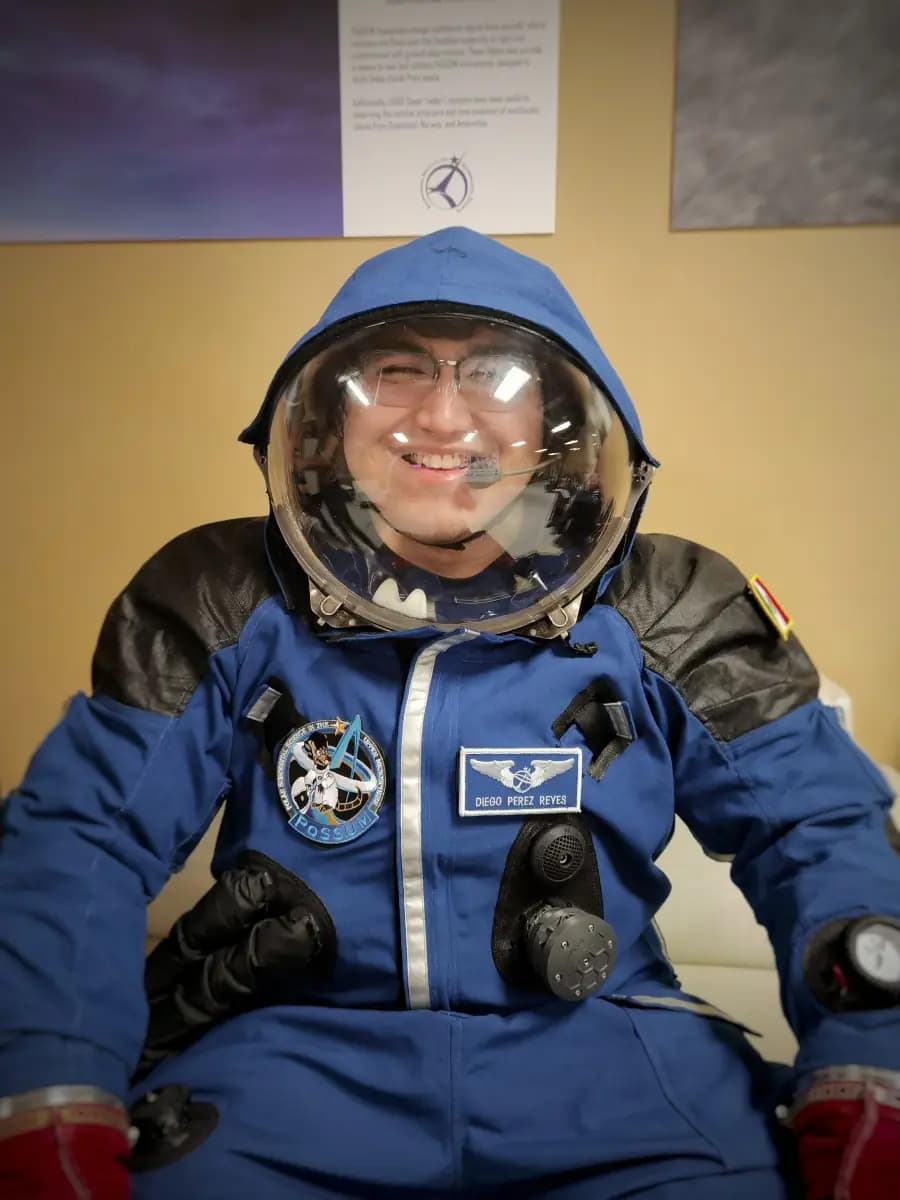
Quantum & space systems
Works across the quantum and spacecraft tracks, from the entropy source to the platform that has to carry it. Scientific-astronaut candidate and LUNARES analog astronaut; mechatronics engineer; quantum computing developer.
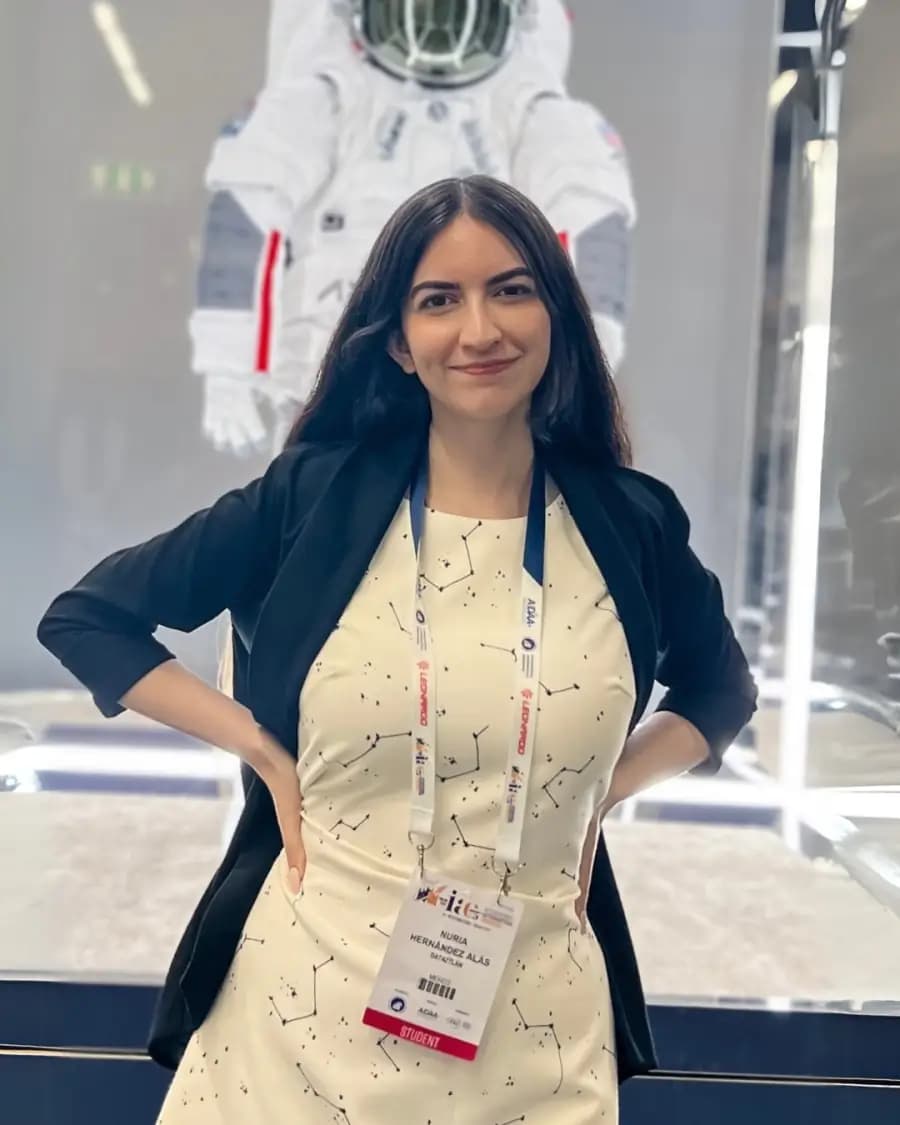
Mechatronics & materials
Leads the material and structural side of the spacecraft track, where a sustainable CubeSat structure has to survive qualification. Mechatronics engineer, materials science specialist and scientific researcher, and an advocate for women's presence in science.
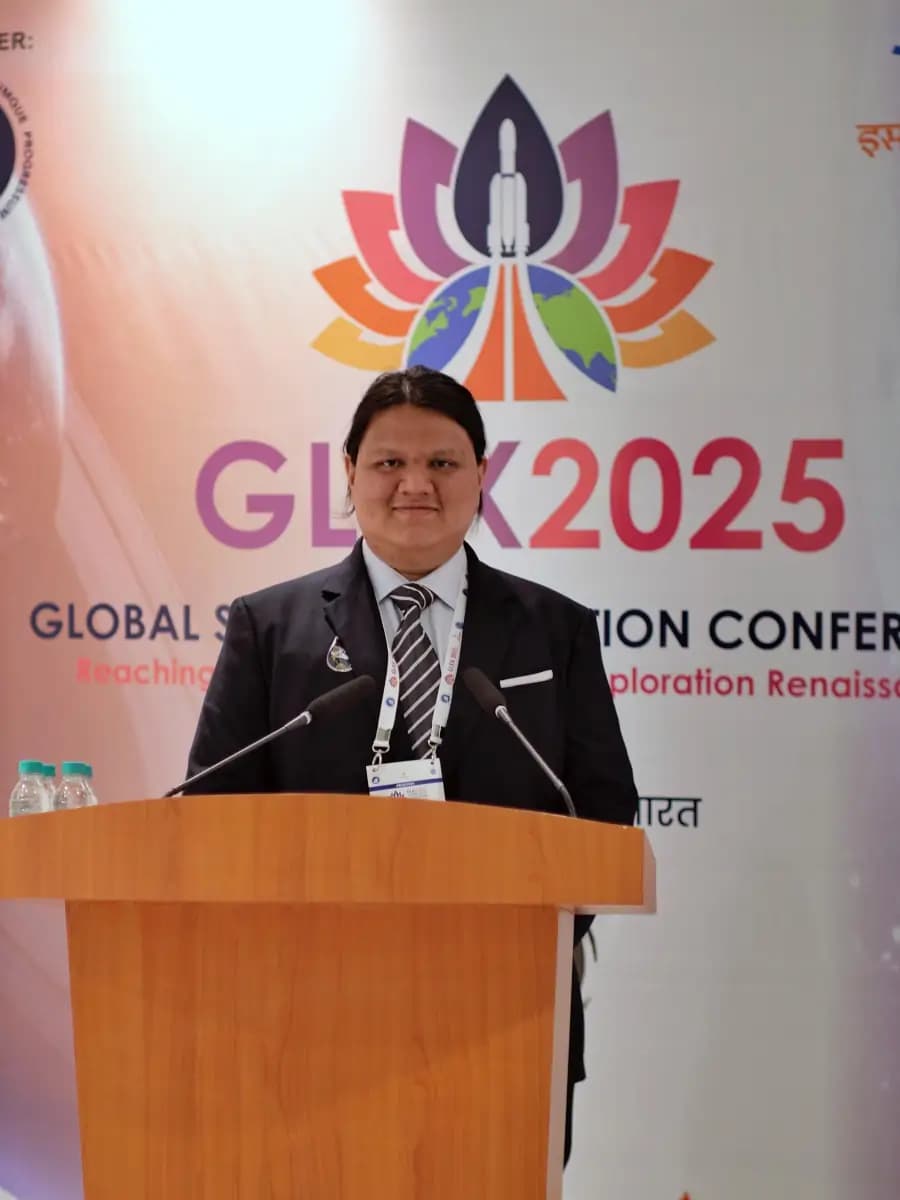
Quantum computing & control
Works where the quantum formulations meet running code and real control systems. Computer science and mechatronics engineer, quantum computing developer, liquid neural network researcher and control theory enthusiast.

Data science & AI
Owns the intelligence layer: the models that turn Earth-observation data into an answer, sized for hardware that has a power budget. Data scientist, machine learning and AI specialist, liquid neural networks researcher and AI model architect.

Strategy & operations
Runs strategy, operations and the commercial side of a company whose products take years to build. Economist and business administrator, organizational consultant, strategic planner and operations optimizer.
Principles
Understand the phenomenon before designing the product.
Security that is added at the end is a property of a component. Security that is designed in is a property of the system.
Move only the answer.
We publish what we measured and label what we did not. Scientific rigor, no exceptions.
Infrastructure people depend on, designed and operated to that standard.
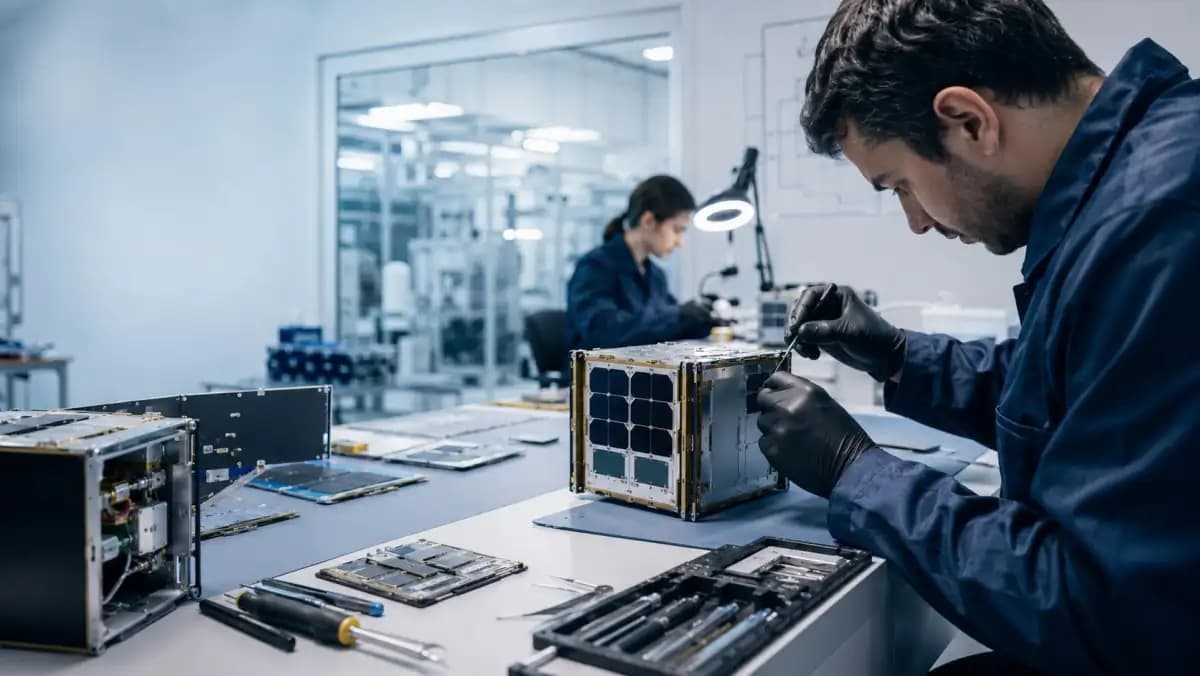
CubeSat integration on a laboratory bench. · Illustrative image
Engineering, research, operations, if the stack on this site is the problem you want to work on, write to us.